The pulp and paper industry is evolving rapidly, with advancements in sustainable packaging, bio-based materials, and innovative manufacturing. But the future of the field depends on something simpler: curiosity.
When students begin asking questions like “How is paper made?” or “Can we replace plastic?” they are stepping into the kind of real-world problem-solving that makes this industry so compelling.
So how do we encourage that spark?
Here are a few practical ways parents, STEM educators, and industry professionals can help young students explore what a career in the pulp and paper industry might look like, and why it matters.
For Parents: Make Curiosity a Habit
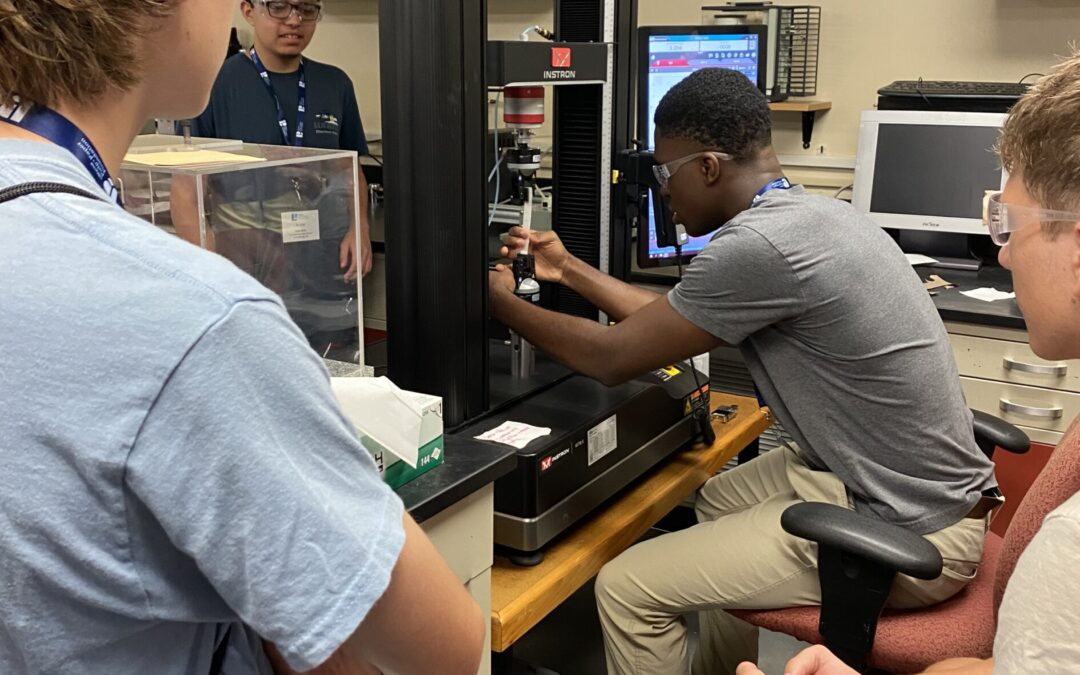
A demonstration during Consider Engineering
You do not need to be a scientist to raise one. Creating space for questions, exploration, and problem-solving is more than enough.
- Look for everyday science moments. Point out packaging at the grocery store, paper products at home, or changes in how things are recycled.
- Ask open-ended questions such as “What do you think this is made of?” or “How do you think that works?”
- Watch short science videos together, especially those that relate to sustainability, materials, or manufacturing.
- Ask their teachers or guidance counselors about field trips through UMPPF. Many Maine students visit mills or UMaine labs through organized school visits, and the UMPPF Career Exploration Seminars can help support those experiences.
- If your student is a high school junior, encourage them to apply for Consider Engineering — a free, four-day summer program designed to introduce students to the college experience and the engineering profession.
Most importantly, encourage effort over answers. Engineers often start as kids who are not afraid to try, fail, and try again.
For STEM Teachers: Connect Science to Industry
One of the most effective ways to engage students is to show them that what they are learning applies in the real world.
- Incorporate industry-themed experiments that mirror real processes.
- Use project-based learning to let students test hypotheses and collect data.
- Invite guest speakers from local mills, labs, or engineering programs.
- Request a UMPPF STEM Kit for your classroom.
These free kits include everything needed for a multi-day classroom experiment that compares plastic wrap to cellulose nanofiber (CNF), a renewable material developed at UMaine’s Process Development Center.
Students test material performance, collect data, and learn how sustainable packaging connects to careers in chemistry, materials science, and environmental engineering.
Learn more or request a STEM Kit for your classroom: https://umaineppf.org/stem-kits/
For Industry Professionals: Be Visible, Be Approachable
You do not have to be a teacher to make an impact on students. Simply sharing your story can make a career path more real and more reachable.
- Talk about your own journey, including the unexpected parts.
- Volunteer for classroom visits or STEM events. Even a 15-minute Q&A session can make a difference.
- Support hands-on learning by sponsoring kits, materials, or field trips.
- Mentor when you can. High school and college students often look to professionals for guidance as they consider their options.
- Support UMPPF’s outreach efforts. Donations help us offer STEM Kits at no cost to teachers, organize student and teacher site visits, and make programs like Consider Engineering free for families. Visit our donations page to contribute.
The more students can see people working in the pulp and paper industry and hear their enthusiasm, the more likely they are to imagine themselves in that role one day.
The Spark Matters
Curiosity is the root of innovation, and the pulp and paper industry has room for both. Whether it starts with a science experiment in school or a question over dinner, every moment of interest matters.
At UMPPF, we believe early exposure and hands-on learning are key to shaping tomorrow’s engineers. With tools like our STEM Kits and the support of educators, families, and professionals, we are helping students see the possibilities in paper, and in themselves.
Recent Comments